


Capital
Akbar



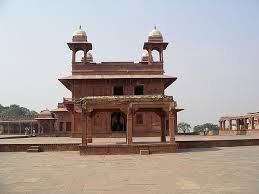
Capital
Akbar was a follower of Salim Chishti, a holy man who lived in the region of Sikri near Agra. Believing the area to be a lucky one for himself, he had a mosque constructed there for the use of the priest. Subsequently, he celebrated the victories over Chittor and Ranthambore by laying the foundation of a new walled capital, 23 miles (37 km) west of Agra in 1569, which was named Fatehpur (town of victory) after the conquest of Gujarat in 1573 and subsequently came to be known as Fatehpur Sikri in order to distinguish it from other similarly named towns.Palaces for each of Akbars senior queens, a huge artificial lake, and sumptuous water filled courtyards were built there. However, the city was soon abandoned and the capital was moved to Lahore in 1585. The reason may have been that the water supply in Fatehpur Sikri was insufficient or of poor quality. Or, as some historians believe, Akbar had to attend to the northwest areas of his empire and therefore moved his capital northwest. Other sources indicate Akbar simply lost interest in the city or realised it was not militarily defensible. In 1599, Akbar shifted his capital back to Agra from where he reigned until his death.

 Akbars Death
 Akbar the Statesman
 Imperial expansion
 Biography
 Akbars Early Life
 Akbar the Architect
 Akbar the Hunter
 Military innovations
 Akbars Governing Style
 Intrigue and Further Expansion
 Foreign Relations
 Akbar the Polemic
 Test your English Language
  Chhath Puja Celebration
 Celebration of Nag Panchami
 Amazing Science Images You Must See Play Hockey
 What to Eat in Kerala Rules to play Luge
 Weird English Movie Names
 Precautions while using Touch Screen Mobile
 Ellora Caves Simple Science Rainy Day Ideas
Kissing Facts That May Shock You Most Cruel Rulers Ever in History Best Ways to Propose a Girl Easy Vastu tips for your home
Ellora Caves Simple Science Rainy Day Ideas
Kissing Facts That May Shock You Most Cruel Rulers Ever in History Best Ways to Propose a Girl Easy Vastu tips for your home Precautions while using Cathode Ray Oscilloscope
 Precautions while using Centrifuge
 Precautions while using CNG