


Origin of the autumnal ceremony Sharadiya
Durga Puja



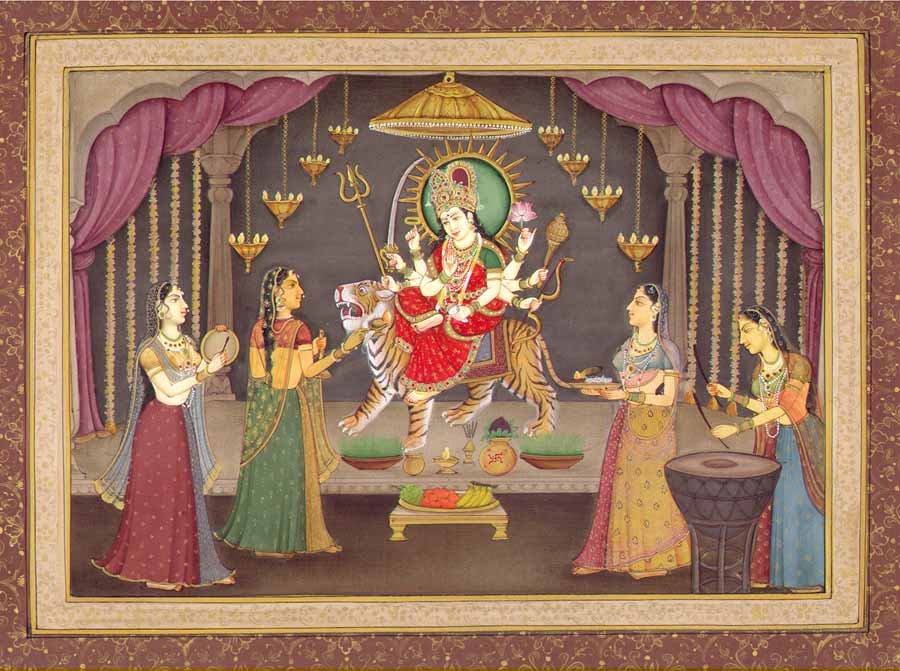
Origin of the autumnal ceremony Sharadiya
The actual worship of the Goddess Durga as stipulated by the Hindu scriptures falls in the month of Chaitra, which roughly overlaps with March or April and is called Basanti Durga Puja. This ceremony is not observed by many and is restricted to a handful in the state of West Bengal. The more popular form, which is also known as Sharadiya Autumnal Durga Puja, is celebrated later in the year with the dates falling either in September or October. Since the Goddess is invoked at the wrong time, it is called Akaal Bodhon in Bengali.One of the earliest evidence of the autumnal celebration can be found in the Tripura Buranji, where it is described that the envoy of the Twipra Kingdom, Rameshwar Nyayalankar, was invited to witness the Durga puja at Rangpur, the capital of the Ahom kingdom, in 1711.
There is also a mythological belief that Lord Ram, who was a Durga worshiper, worshiped Goddess Durga before going for a war with Ravana. Rama had performed Chandi Homa and invoked the blessings of Durga, who blessed Rama with secret knowledge of the way to kill Ravana. On the day of Ashvin Shukla Dashami, Ramas party found Sita and defeated Ravana. This day is thus also celebrated as Dussehra.

 When is Durga Puja Celebrated
 Durga Puja in Kolkata
 In other parts of India
 Durga Puja in Indonesia
 Durga Chalisa
 Decorations
 Durga Puja in West Bengal
 What to Expect During Durga Puja
 Media attention
 Celebration of various type
 Durga puja mantra
 Names
Names Test your English Language
  Bizarre Cuisines People Actually Enjoy Eating Incredible Sea Arches Around the World
 The Most Stylish Men Ever
 Home Remedies Ways to Reduce Your Impact
 Popular Men Deodorant Brands
 What to Eat in Andhra Pradesh Most Expensive Dog Breeds Ten Ball Billiards
 Best Hotel Swimming Pools Rules to play Shot Put
 Precautions while using Power Supply Toronto Puff Pony Hairstyles Best Shaded Mehndi Designs Celebrities Who Swear By Yoga CHEAPEST COUNTRIES TO LIVE IN
 Chhath Puja Celebration