


Inscriptions at Ellora
Ellora Caves



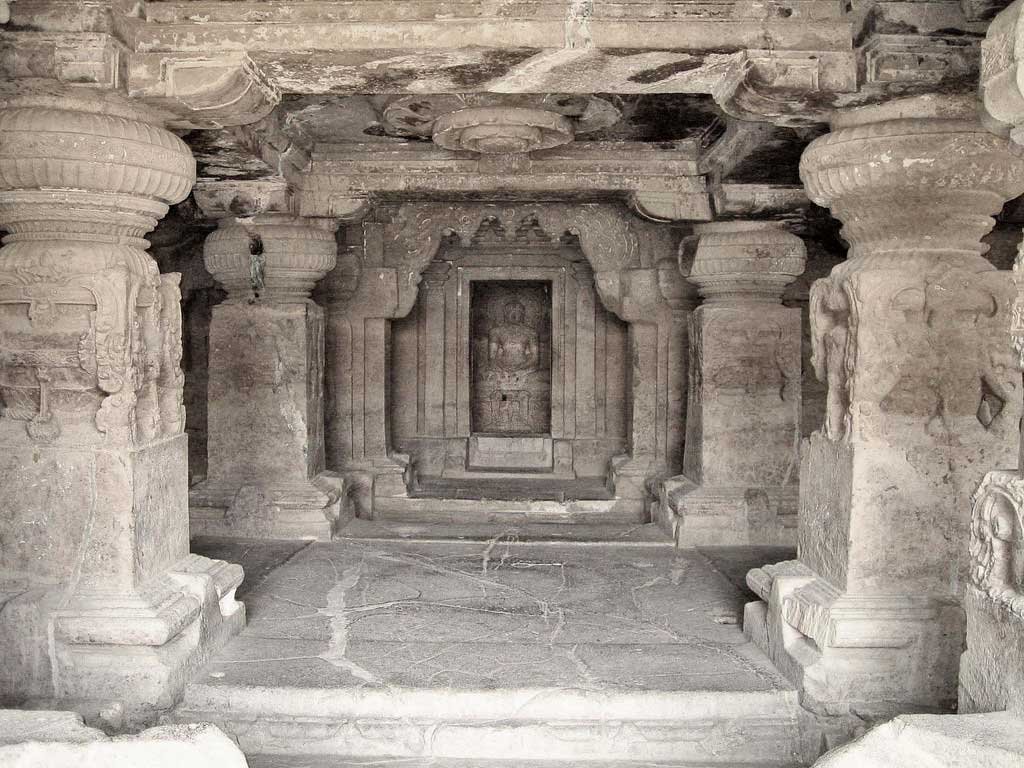
Inscriptions at Ellora
Several inscriptions at Ellora range from 6th century to 15th century. The best known of them is an inscription of Rashtrakuta Dantidurga (c. 753 57 A.D.) on the back wall of the front mandapa of Cave 15, which gives an account of his conquests. Inscriptions on the Kailash temple itself range from 9th to 15th century. Jain cave Jagannatha Sabha has 3 inscriptions that give the names of monks and donors. A Parshvanth temple on the hill has a 11th century inscription that gives the name of the donor from Vardhanapura.The Great Kailasa (Cave 16) is attributed to Krishna I (c. 757 83 A.D.), the successor and uncle of Dantidurga. A copper plate grant by Karka II (c. 812 13 A.D.) narrates that a great edifice was built on a hill by Krishnaraja at Elapura (Ellora).The Ellora caves, unlike Ajanta, were never lost. There have been several written records that indicate that these caves were visited regularly. The earliest is that of the Arab geographer Al Masudi of the 10th century A.D. In 1352 A.D. Sultan Hasan Gangu Bahmani, who camped at the site and visited the caves. The others are by Firishta, Thevenot (163367), Niccolao Manucci (1653 1708), Charles Warre Malet (1794), and Seely (1824)

 The Indra Sabha
 The Jain caves
 The Dashavatara
 Places In and Around Ellora
 Where to Stay
 The Hindu caves
 Ellora Caves
 How to Reach Ellora by Flight
 Geology of Ellora
 Best Time to Visit
 When to visit
 Other Hindu caves
 Test your English Language
  What to Eat in Assam
 Rules to play Pocket Billiards Most Expensive Mobile Phones in the World
 Myth about Airplanes
 Teddy Day krishna Janmashtami Celebration
 Mosquito Prevention Rules to play Kickball Biggest Male Models of All Time
 Celebration of Dhanteras Ways Technology Makes You Stupid
 Benefits of Mangosteen Foods That Are So Much Better Fried Rules to play 3 Ball Pool
 Benefits of Star Anise Bodyweight Exercises Bollywood Beautiful Queens Bollywood Bridal Mehndi Designs