


Shanti Swarup Bhatnagar
Famous Indian Scientists



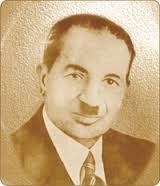
Shanti Swarup Bhatnagar
Bhatnagar was born on 21 February 1894 at Bhera, in the district of
Shapur in Punjab (now in Pakistan) When he was barely eight months old,
his father passed away He spent his next thirteen years under the care of his
maternal grandfather in Bulandshahar in Uttar Pradesh Under the influence
of his grandfather, young Bhatnagar not only developed a taste for engineering
and science but also became interested at a very early age in geometry and
algebra and in making mechanical toys In 1911, Shanti published a letter to
the editor, in The Leader, Allahabad, on how to make a substitute for carbon
electrodes in a battery using molasses and carbonaceous matter under pressure
and heat
Matriculating the same year, he joined the Dayal Singh College,
Lahore After finishing his intermediate examination in first division, Shanti
joined the Forman Christian College and after his BSc and MSc degrees, he
spent the next two years at the University of London earning his DSc degree
on the surface tension of oils, under the supervision of Professor FG Donnan
Returning to India in 1921, he joined the Benares Hindu University as
a Professor, remaining there till 1924 From 1924 to 1940 he served as the
Director of the University Chemical Laboratories, Lahore, addressing problems
in industrial and applied chemistry
In August 1940, Bhatnagar took over as the Director of the newly
created Directorate of Scientific and Industrial Research This organisation
became the Council of Scientific and Industrial Research, with Bhatnagar as
its Director Bhatnagars tenure saw the setting up of 12 laboratories and the
total number of CSIR laboratories today stands at 40
The British Government conferred on him the Order of the British
Empire and in 1941, he was made the Knight Bachelor In 1943 he was elected
a Fellow of the Royal Society and received the Padma Vibhushan (1954) from
the Government of India
Shanti Swarup Bhatnagar played a significant part along with Homi
Bhabha, Prasanta Chandra Mahalanobis, Vikram Sarabhai and others in
building of postindependence Science & Technology infrastructure and in
the formulation of Indias science policies

 Sunil Mukhi
 M S Swaminathan
 Subramaniam Chandrasekhar
 Eluvathingal Devassy Jemmis
 Somya Ranjan Mahapatra
 Vijay P Bhatkar
 Abhas Mitra
 Narendra Karmarkar
 Pranav Mistry
 Mankombu Sambasivan Swaminathan
 Ashok Gadgil
 Yellapragada Subbarow
 Test your English Language
  Tips to get ready for School
 Venice Biggest Man Made Environmental Disasters Top Cricket Stadiums in the world
 Best Places to Celebrate New Year Sachin 100 Most Attractive People in Sports The Worlds Highest Paid Athletes Rules to play Olympic Decathlon Rules to play 9 ball Pool
 What to Eat in Dadra and Nagar Haveli Best Shaded Mehndi Designs Rules to play Curling The Beautiful World Heritage Sites
 Tips to succeed in GATE Exam Modern Christmas Decor Ideas
 Modi Ministry
 More Xmas Carols