


Verbascum Myconi
Flowers



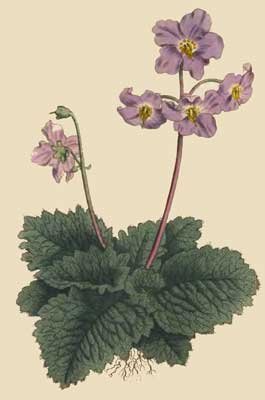
Verbascum Myconi
Most of the plants of this genus are tall and shewy, the one here figured is however, of very humble growth, its flowering stem in the cultivated plant rarely exceeding six inches in height, its flowers are proportionably large, of a blueish purple colour, and highly ornamental, they make their appearance in May, and continue successively in blossom for several months, hence it becomes a desirable plant to cultivate, especially for the decorating of rock work, it is very hardy, requires a north aspect in the summer, and to be carefully watered in dry weather, will grow in almost any soil, and is usually propagated by planting its roots in autumn.Grows spontaneously on the Pyrenean Alps, in its wild state it is more dwarfish than our figure represents it, its foliage more woolly, and enriched with various tints, which the plant loses on cultivation, such specimens I saw in the possession of Dr. R. Halifax, of Albemarle Street, who gathered it on its native Alps.Was cultivated by Mr. Miller, in 1731, Ait. Kew. and most probably long before that period by Parkinson, who lives a figure and accurate description of it in his Parad. terrestris.

 Geranium Angulatum
 Lathyrus Sativus
 Cistus Incanus
 Glycine Rubicunda
 Argemone Mexicana
 Apocynum Andros mifolium
 Mesembryanthemum Bicolorum
 Michauxia Campanuloides
 Lathyrus Tingitanus
 Lychnis Chalcedonica
 Leucojum Vernum
 Pelargonium Cordifolium
 Test your English Language
  Greatest Cricketers of All Time
 Benefits of Cashew
 Benefits of Iceberg lettuce
 Healthy Breakfast
 Jogging Tips and Guidelines
 Benefits of Saffron The Quick and Healthy Breakfasts Most Beautiful Christian College and University Campuses in the World Top Fastest Bikes in the world Worlds Biggest Casinos Selfie Ideas Worlds Most Beautiful Small Towns Science Experiments Ideas Rules to play Darts Most Difficult Languages to learn in the world Most Obscure Sports In The World Most Photogenic and breathtaking places in the world Most Player of the Match Award Winners in ODIs