


Sempervivum Arachnoideum
Flowers



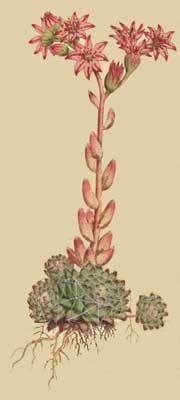
Sempervivum Arachnoideum
By the old Botanists, this plant was considered as a Sedum, and to this day it is generally known in the gardens by the name of the Cobweb Sedum, though its habit or general appearance, independent of its fructification, loudly proclaims it a Houseleek.
In this species the tops of the leaves are woolly, as they expand they carry this woolly substance with them, which being thus extended, assumes the appearance of a cobweb, whence the name of the plant.
Like most of the Houseleeks it is best kept in a pot, or it will grow well and appear to great advantage on a wall or piece of rock work, the more it is exposed to the sun, the more colour will enliven its stalks and foliage, and the more brilliant will be its flowers, the latter make their appearance in July.
It is propagated by offsets which it sends forth in abundance.
It is no uncommon practice to treat this beautiful species of Houseleek, as a native of a warm climate, under such an idea we have seen it nursed up in stoves, while the plant spontaneously braves the cold of the Switzerland Alps.

 Fagonia Cretica
 Monsonia speciosa
 Adonis Vernalis
 Ixora Coccinea
 Zinnia Multiflora
 Rubus Arcticus
 Primula Villosa Mountain Primula
 Lilium Candidum
 Anthyllis Tetraphylla
 Leucojum Vernum
 Sedum Populifolium
 Iris Persica Persian Iris
 Test your English Language
  Mountain Biking
 Uncommon Fruits and Veggies Coolest Hotels Ever
 Grandparents Day Celebration
 Emperor Ashoka
 Azim Premji
 Most Amazing Roads
 Benefits of Cherry
 Sign Of Pregnancy
 Amazing US Lakes for Summer Vacation
 Benefits of Turnips
 Healthy Smiley Face
 Tips to succeed in Life
 Precautions while using Microwaves Looney Tunes Characters With Mental Disorders Most Popular Animals Most Popular Apps Employees Use At Work Most Popular Cricketers Perpetually