


Elected President
Abraham Lincoln



Elected President
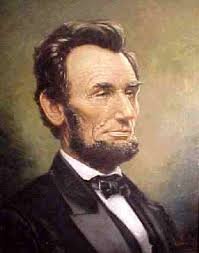
In 1854, Congress passed the Kansas Nebraska Act, which repealed the Missouri Compromise, and allowed individual states and territories to decide for themselves whether to allow slavery. The law provoked violent opposition in Kansas and Illinois. And it gave rise to the Republican Party. This awakened Abraham Lincolns political zeal once again, and his views on slavery moved more toward moral indignation. Lincoln joined the Republican Party in 1856.In 1857, the Supreme Court issued its controversial decision Scott v. Sanford, declaring African Americans were not citizens and had no inherent rights. Though Abraham Lincoln felt African Americans were not equal to whites, he believed the Americas founders intended that all men were created with certain inalienable rights. Lincoln decided to challenge sitting U.S. Senator Stephen Douglas for his seat. In his nomination acceptance speech, he criticized Douglas, the Supreme Court, and President Buchanan for promoting slavery and declared a house divided cannot stand.
The 1858 Senate campaign featured seven debates held in different cities all over Illinois. The two candidates didnt disappoint the public, giving stirring debates on issues ranging from states rights to western expansion, but the central issue in all the debates was slavery. Newspapers intensely covered the debates, often times with partisan editing and interpretation. In the end, the state legislature elected Douglas, but the exposure vaulted Lincoln into national politics.In 1860, political operatives in Illinois organized a campaign to support Lincoln for the presidency. On May 18th at the Republican National Convention in Chicago, Abraham Lincoln surpassed better known candidates such as William Seward of New York and Salmon P. Chase of Ohio. Lincolns nomination was due in part to his moderate views on slavery, his support for improving the national infrastructure, and the protective tariff. In the general election, Lincoln faced his friend and rival, Stephan Douglas, this time besting him in a four way race that included John C. Breckinridge of the Northern Democrats and John Bell of the Constitution Party. Lincoln received not quite 40 percent of the popular vote, but carried 180 of 303 Electoral votes. Abraham Lincoln selected a strong cabinet composed of many of his political rivals, including William Seward, Salmon P. Chase, Edward Bates and Edwin Stanton. Formed out the adage Hold your friends close and your enemies closer, Lincolns Cabinet became one of his strongest assets in his first term in office

 Childhood
 Synopsis
 Assassination
 Biography
 Entering Politics
 Elected President
 The Emancipation Proclamation
 The Issue of Slavery 1858 Lincoln Douglas Debates
 Assassination of Abraham Lincoln
 A Constitutional Moral or Local Issue
 Growing Up
 Historical Significance
 Test your English Language
  Ways To Study Effectively Rules to play Shuffleboard Rules to play One Pocket Pool
 What to Eat in Bihar Famous Nurses Who Made History
 Healthy Back Search Tricks
 Durga Puja Most Powerful Cities On Earth
 Weird Plants
 World Most Beautiful Temples
 Precautions while using Overhead Projectors Rules to play Power Walking
 Tips for success in Group Discussions
 Beautiful National Parks Around the World Biggest Man Made Environmental Disasters Biggest things in the World
 Bill Gates