


Meghnad Saha
Famous Indian Scientists



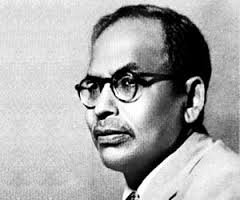
Meghnad Saha
Meghnad Saha was born on 6 October 1893 in Sheoratali village near
Dhaka in present day Bangladesh His father Jagannath Saha was a grocer in
the village After primary education, he was admitted to a middle school that
was seven miles away from home He stayed with a doctor near the school
and had to work in that house to pay for his boarding and lodging Overcoming
all these difficulties, he stood first in the Dhaka middle school test, thus
securing a Government scholarship and joined the Dhaka Collegiate School
in 1905
Great political unrest was prevailing in Bengal, caused by the partition
of the province by the British against strong popular opinion Meghnad Saha
was among the few senior students who staged a boycott of the visit by the
then Governor, Sir Bampfylde Fuller and as a consequence forfeited his
scholarship and had to leave the institution He then joined the Kisori Lal
Jubilee School where he passed the entrance test of the University of Calcutta
standing first among students from East Bengal He graduated from Presidency
College with mathematics as his major
He then joined the newly established Science College in Kolkata as a
lecturer and pursued his research activities in physics By 1920, Meghnad
Saha had established himself as one of the leading physicists of the time His
theory of hightemperature ionization of elements and its application to stellar
atmospheres, as expressed by the Saha equation, is fundamental to modern
astrophysics; subsequent development of his ideas has led to increased
knowledge of the pressure and temperature distributions of stellar atmospheres
In 1920, Saha went to Imperial College, London and later to Germany
Two years later he returned to India and joined the University of Calcutta as
Khaira Professor He then moved to the University of Allahabad and remained
there till 1938, establishing the Science Academy in Allahabad (now known
as the National Academy of Science) In 1927, he was elected a Fellow of the
Royal Society of London
He returned to the University of Calcutta in 1938 where he introduced
nuclear physics into the postgraduate physics curriculum In 1947 he
established the Indian Institute of Nuclear Physics (now known as the Saha
Institute of Nuclear Physics) Later in his life, Saha played an active role in
the development of scientific institutions throughout India as well as in national
economic planning involving technology

 K Radhakrishnan
 Kotcherlakota Rangadhama Rao
 Sir Chandrasekhara Venkata Raman
 Ennackal Chandy George Sudarshan
 G N Ramachandran
 D Bap Reddy
 Udupi Ramachandra Rao
 Anil Kakodkar
 Eluvathingal Devassy Jemmis
 Birbal Sahni
 Gautam Radhakrishna Desiraju
 Mankombu Sambasivan Swaminathan
 Test your English Language
  World Flags
 Beautiful National Parks Around the World
 Healthy Stomach
 Myth about Addiction
 Cartoon Characters
 Host a party Male And Female Celebrities That Look Terrifyingly Similar
 Astrology Rules to play 9 ball Pool
 Benefits of Saffron Mouthwatering Foods to Try
 Amazing US Lakes for Summer Vacation Most Unbelievable Feats Of Humans
 Benefits of Curry Leaves
 Sardar Vallabhbhai Patel Oldest People To Accomplish Amazing Feats One Pocket Pool Online Marketing Trends