


Sir Chandrasekhara Venkata Raman
Famous Indian Scientists



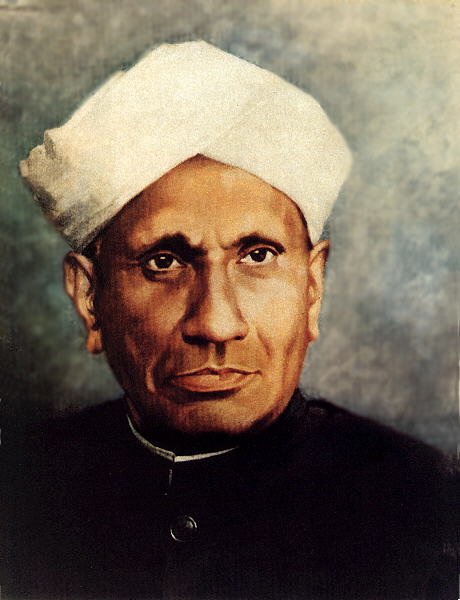
Sir Chandrasekhara Venkata Raman
Chandrasekhara Venkata Raman was born at Tiruchirapalli in Tamil
Nadu on 7 November 1888 His father was a lecturer in mathematics and
physics so from the very beginning he was immersed in an academic
atmosphere Ramans academic brilliance was established at a very young
age He finished his secondary school education at the tender age of thirteen
and entered the Mrs AVN College at Vishakapatnam, Andhra Pradesh Two
years later he moved to the prestigious Presidency College in Chennai
When he was fifteen, he topped his class to receive his BA degree
with honours in Physics and English Raman continued his studies at the
Presidency College and when he was barely eighteen, graduated at the top of
his class and received his MA degree with honours
Raman joined the Indian Audit and Accounts Service and was appointed
the Assistant Accountant General in the Finance Department in Kolkata In
Kolkata, he sustained his interest in science by working in the laboratory of
the Indian Association for the Cultivation of Science, in his spare time studying
the physics of stringed instruments and Indian drums
In 1917, Raman gave up his government job to become the Sir
Taraknath Palit Professor of Physics at the Science College of University of
Calcutta (191733) He made enormous contributions to research in the areas
of vibration, sound, musical instruments, ultrasonics, diffraction,
photoelectricity, colloidal particles, Xray diffraction, magnetron, dielectrics,
etc In particular, his work on the scattering of light during this period brought
him worldwide recognition
In 1924 he was elected a Fellow of the Royal Society of London and a
year later was honoured with the prestigious Hughes medal from the Royal
Society Four years later, at the joint meeting of the South Indian Science
Association and the Science Club of Central College, Bangalore, he announced
his discovery of what is now known as the Raman Effect
He was knighted in 1929, and in 1930, became the first Asian scientist
to be awarded the Nobel Prize for Physics for his discoveries relating to the
scattering of light (the Raman Effect) In 1934, he became the Director of the
newly established Indian Institute of Science at Bangalore, where he remained
till his retirement After retirement, he established the Raman Research Institute
at Bangalore, where he served as the Director The Government of India
conferred upon him its highest award,the Bharat Ratna in 1954

 Ravi Gomatam
 Anil Kakodkar
 Amal Kumar Raychaudhuri
 Brahmagupta
 Somya Ranjan Mahapatra
 Dronamraju Krishna Rao
 Pisharoth Rama Pisharoty
 Tej P Singh
 H R Krishnamurthy
 Shreeram Shankar Abhyankar
 Birbal Sahni
 Sir Chandrasekhara Venkata Raman
 Test your English Language
  What to Eat in Orissa
 Famous Logos That Have A Hidden Message
 Xmas Celebration Ideas Valentines Day Lyrics Innovative Kitchen Tools and Gadgets Best Hybrid Cars in the World Exotic Sports Cars
 The Best New Cars Most Beautiful Christian College and University Campuses in the World Rules to play Bocce Ball Amazing Animals Most Expensive Motorcycles Highest Paid Female Gamers
 Dr Bhimrao Ambedkar
 Greatest Concept Cars Ever Oldest People To Accomplish Amazing Feats One Pocket Pool Online Marketing Trends