


Cheiranthus Mutabilis
Flowers



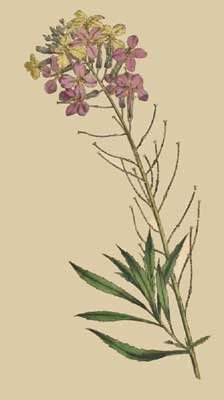
Cheiranthus Mutabilis
The present species of Cheiranthus, unknown both to Miller and Linn?us, was first described in the Hortus Kewensis of Mr. Aiton, who informs us that it was introduced to the Royal Garden in 1777, and found wild in the Island of Madeira by Mr. Masson.Its chief merit as an ornamental plant consists in its early flowering, its blossoms which are shewy contribute to enliven the green house in March and April, on their first expanding, they are white, in some plants (for they are subject to great variation) inclined to yellow, in a few days they become purple, to this change of colour observable also in the Cheiranthus maritimus already figured, it owes its name of mutabilis.
In sheltered gardens at the foot of a wall, we have known this species survive a mild winter, it seems indeed to be almost as hardy as the common stock, it is most commonly however kept in the green house.The usual way of propagating this species, which is of ready and quick growth, is by cuttings, which should be put into the ground as soon as the plant has done flowering, these if properly treated will become handsome plants to place in the green house at the approach of Winter, and to decorate it the ensuing Spring, in like manner may the green house be annually recruited with many similar plants to great advantage.

 Cheiranthus Mutabilis
 Cistus Ladaniferus
 Soldanella Alpina
 Linum Arboreum
 Alyssum Deltoideum
 Aquilegia Canadensis
 Dais Cotinifolia
 Epilobium angustissimum
 Lilium Candidum
 Calceolaria Pinnata
 Gladiolus Communis
 Hedysarum Obscurum
 Test your English Language
  Benefits of Tamarillo fruits
 Krishna Janamashtmi
 Benefits of Artichoke
 Healthy Back Crazy Things You Will Only Find In Japan
 Tips To Lose Weight
 The Red Fort
 Bhai Dooj Celebration
 Top High Speed Bullet Trains
 Benefits of Kumquat fruit Tips to succeed in IELTS Exam
 Mumbai City The Worlds Most Impressive Bridges
 Myth about Acne
 Weird and Wonderful Amazonian Wildlife
 Prime Minister Of India Problems Only 00s Girls Will Understand
 Promise Day