


History
Independence Day



History
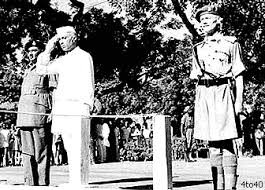
In 1947, after the World War II, Britain could see that it no longer could hold its power over India. It was becoming increasingly difficult and Indian freedom fighters were in no mood to give up. With the international support also coming to an end, Britain decided to relive India from their power but not before June 1948. However, the impending independence more so enhanced the violence between Hindus and Muslims in the provinces of Punjab and Bengal. The communal violence grew so large that it became impossible for new viceroy Lord Mountbatten to control it and as such, he advanced the date for the transfer of power, allowing less than six months for a mutually agreed plan for independence. Thus, India gained its independence on August 15, 1947 but not without paying a heavy price. Partition was done and a separate state for the Muslims was formed, with Muhammad Ali Jinnah being sworn in as Pakistans first Governor General in Karachi. On the midnight of August 15, 1947 India was sworn in as an independent country with Pandit Jawaharlal Nehru as the prime minister and viceroy then as Lord Mountbatten. The official ceremony took place in Delhi. Great leaders and freedom fighters like Mahatma Gandhi, Abul Kalam Azad Jinnah, B. R. Ambedkar and Master Tara Singh are few of the many to whom India owes its freedom.

 Public life
 History
 In popular culture
 Why do we celebrate Independence Day
 National Song
 As the Freedom Dawns
 Different types of celebrations on Independence Day
 Partition and independence
 Celebrations this day
 Celebration
 Why 15th Aug
 Why 1947
 Test your English Language
  The Best Square Cars of all Time
 Awesome Modular Kitchen Designs Rules to play Beach Volleyball Best Women Trench Coats Valentines Gift Ideas Tips to Get Rid of Stress Naturally
 Healthy Forehead
 Candle Sticks Rules to play Luge Famous Party Cities In The World
 Benefits of Plum Gifts Your Favorite Coffee
 Benefits of Turmeric
 Bhai Dooj Celebration Spookiest Abandoned Places Play Cricket Play Hockey Play Long Jump Games